Journal 001 · Palm Beach
Down by
The Breakers.
The place that helped make Palm Beach a destination, and why its story of vision, resilience, and reinvention became the beginning of Chapter One.
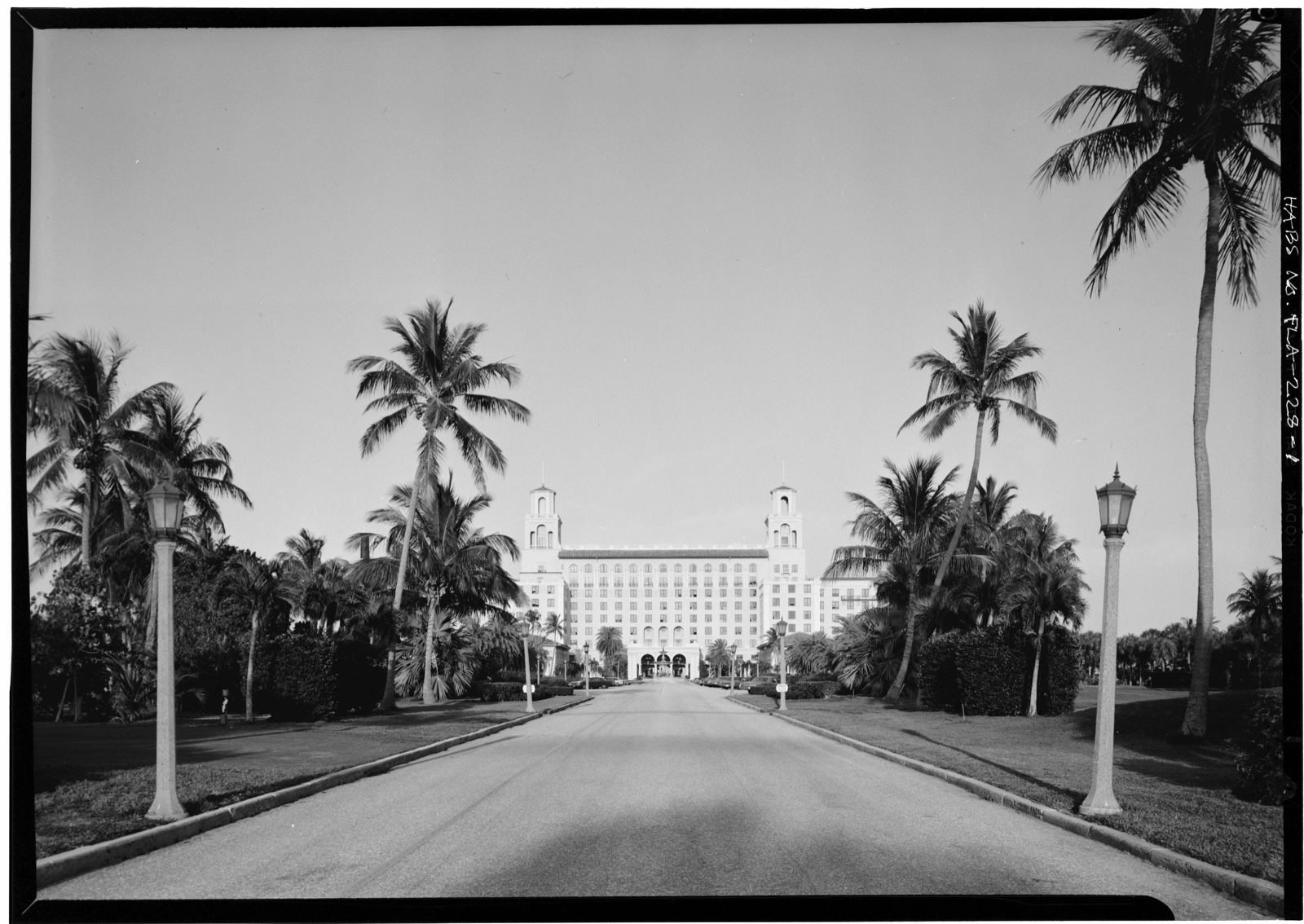
Before Palm Beach became shorthand for a certain kind of American elegance, it was a difficult place to reach. Henry Morrison Flagler saw more than an isolated stretch of coastline. He saw a destination and understood that a destination required a route.
The route before the destination
Flagler had already made his fortune as a co-founder of Standard Oil when he turned his attention to Florida. Through the Florida East Coast Railway and a sequence of ambitious hotels, he helped open the state’s eastern coastline to travel, commerce, and tourism.
In 1893, Flagler purchased land between the Atlantic Ocean and Lake Worth. The following year, his railway reached West Palm Beach and his vast Royal Poinciana Hotel opened on the lakefront. The arrival of rail service connected Palm Beach to the northern cities whose winter travelers would soon shape its identity. National Park Service records describe that connection as a turning point in Palm Beach’s emergence as a luxury resort destination.
A hotel named by the ocean
Flagler’s second Palm Beach hotel opened on January 16, 1896. Originally called the Palm Beach Inn, it stood on the oceanfront and offered something the enormous Royal Poinciana could not: proximity to the Atlantic itself.
Guests began asking for rooms “down by the breakers,” where the waves crashed near the hotel. The phrase became familiar enough that, in 1901, the Palm Beach Inn officially became The Breakers. Its name was not invented in a boardroom. It came from the experience of the place.
Flagler built the route.
The Breakers became the destination.
Rebuilt, not replaced
The Breakers’ story is not one of uninterrupted permanence. Fire destroyed the hotel in 1903. It was rebuilt and reopened the following year. Another fire destroyed it in 1925. The current building opened in 1926, designed by Shultze and Weaver with an Italian Renaissance exterior inspired by the Villa Medici in Rome.
That history gives the hotel its real weight. Its importance does not come only from age or ornament. It comes from an ability to return, adapt, and remain recognizable. The Breakers has been renewed repeatedly without surrendering the identity that made it matter in the first place.
What The Breakers represents
For Palm Beach, The Breakers represents the moment a place became a destination. It carries the architecture, hospitality, ambition, and seaside glamour that came to define the island. It also reflects the scale of Flagler’s larger Florida vision: transportation, development, and experience working together to change how people moved through the state.
That legacy is complex. The expansion that made South Florida accessible also accelerated development across a fragile landscape. But the fundamental lesson remains relevant: place is not passive. The environments we build and the routes we create toward them shape what people imagine is possible there.
Why Chapter One begins here
Office of the Day is for people whose work was never meant to stay behind one desk. It is for those with something meaningful to build and the focus to keep moving it forward wherever they are. The office changes. The work continues.
The Breakers was the natural starting point because it embodies three qualities at the center of that idea: endurance, resilience, and timeless relevance. It has survived disruption, evolved with the world around it, and remained unmistakably itself.
The Breakers Tee carries that story as the first uniform of Office of the Day. It is not a souvenir of a building. It is a symbol for people who adapt, remain in motion, and keep the work moving wherever they are.
The short office
A few things to know.
Who founded The Breakers Palm Beach?
Henry Morrison Flagler founded the oceanfront hotel that became The Breakers. The original Palm Beach Inn opened in 1896.
Why is it called The Breakers?
Guests asked for rooms “down by the breakers,” referring to the Atlantic waves beside the hotel. The name became official in 1901.
Why did Office of the Day begin here?
The Breakers represents vision, resilience, and the ability to evolve without losing identity. Those are the central themes of Chapter One.
Sources
The Breakers historical timeline ↗National Park Service historical record ↗National Park Service: Developing South Florida ↗Office of the Day is independently created and is not affiliated with or endorsed by The Breakers Palm Beach.